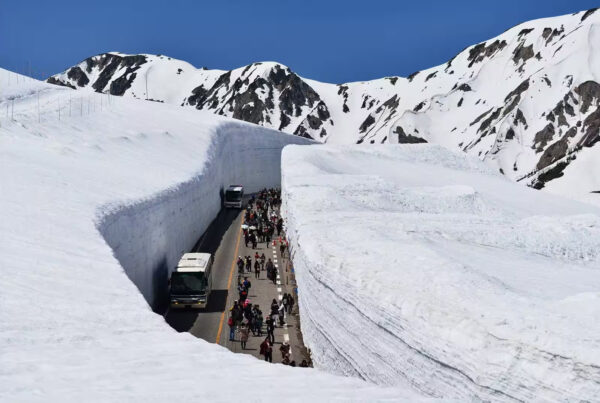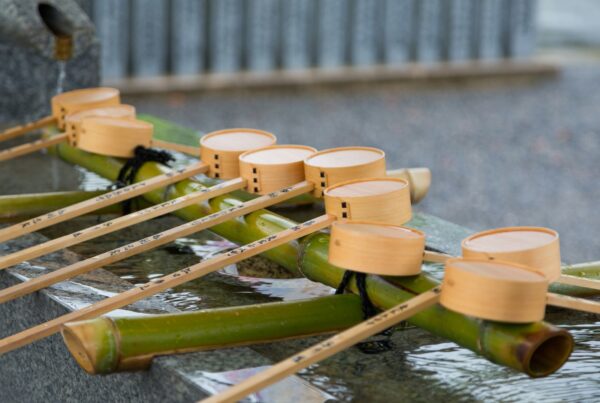

Got a case of the post-Christmas blues? Are the freezing winds of winter getting you down? Not to worry! Japan is no stranger to sub-zero temperatures, and as such, there are plenty of activities and attractions designed to make the season bright, like enjoying the warmth of a kamakura.
Like the Inuits of Canada, winter in Japan comes with its own frozen huts called “kamakura.” These hollowed-out snowdomes were originally built as shrines to the God of Water, and continue to be a beloved winter tradition providing a surprisingly snug nook against the frigid climate. Come with us as we duck inside Japan’s top kamakura spots.
Tokamachi City, Niigata Prefecture
Nestled deep in Japan’s renowned “Snow Country” in the Uonuma region, Tokamachi City transforms into a blanket of white each winter, making it the perfect location for rows of pristine kamakura, or, in the local Niigata slang, “Hon-yara caves”.
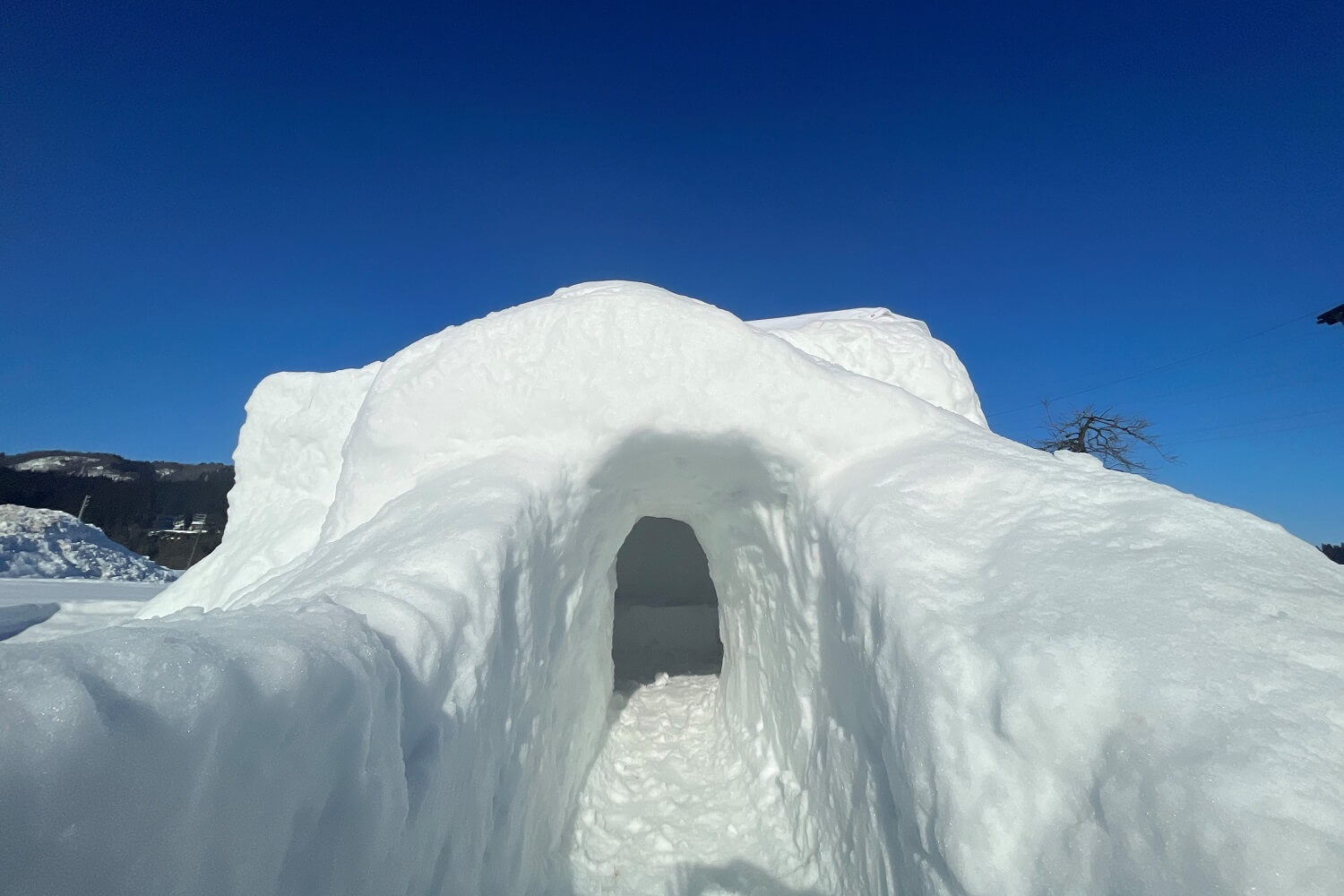 Inside the frozen huts, you’ll find quite a spacious interior kept warm with a charcoal grill covered in mochi (rice cakes) and marshmallows. Additionally, you’ll have the chance to don traditional Snow Country garments like straw “sugeboshi” snow hats and “kanjiki” snowshoes for an authentic romp through a snowy riverbed.
While you can most certainly purchase a daytime package for kamakura use, only the nighttime package comes with the flicker of candles, the nourishing heat of the fire and the sampling of warm sake for your bones.
Address: 472-1 Baba Hei, Tokamachi City, Niigata Prefecture
Dates: January – March
Reservations must be made at least one week in advance
Iiyama, Nagano Prefecture
Another area closely connected to the Snow Country is the city of Iiyama, located in the far north of Nagano prefecture. After the popular Shinanodaira Ski Resort closed down in 2001, the abundance of snow on the area’s wide fields was repurposed as Kamakura Village, the new home for 20 snug snow huts offering exclusive dining experience for a limited time.
 Inside Kamakura Village, adorable domes guests are treated to the area’s local specialty, Noroshi Nabe, a miso-based hot-pot filled with Iiyama’s specialty ‘Miyuki Pork’, locally grown mushrooms and vegetables.
However, there is more than just excellent cuisine in the Village. At the end of the lane stands a vibrant vermillion torii gate leading the way to Kamakura Shinto Shrine, where you can say a prayer for free. Additionally, numerous 2-day packages with local lodging abound, allowing you to take advantage of the area’s snowy activities such as snowmobiling, snow-trekking, ice-cream making, hot spring bathing and even fireworks gazing.
Address: 807-2 Kotobuki, Iiyama, Nagano Prefecture
Dates: End of January to end of February 28
Please check the availability and fees as booking reservations and times will vary
Nakao, Gifu Prefecture
 Deep in the wooded highlands of Gifu’s snow-prone prefecture is the village of Nakao, the resting place of the sacred Nakao Hakusan Shrine, and the site of the annual Nakao Kamakura Festival.
Unlike other entries we’ve covered so far, Nakao Kamakura Festival is a full-fledged 10-day long nighttime event held from February 1st to the 10th, and includes a number of live performances, cooking classes and a shrine tour through the surrounding forest. The kamakura themselves are lined up around the shrine grounds dispensing goods like hot sake and soup, as well as providing a surprisingly cozy nook to get warm and chat with a fellow pilgrim.
One of the highlights of the festival is the Nakaojishi (also known as the “Lion Dance”), a traditional two-man performance where a colorful lion struts and performs impressive acrobatic feats set to the sounds of flute and drums. Try to catch both shows on the first and last day of the festival!
Address: 400-1 Okuhida Onsengo Kansaka, Takayama, Gifu Prefecture
Dates: February 1st to 10th, 8pm to 9pm (until 9:30pm on Saturdays only)
Admission is free, but prices of drinks and food will vary
Niko City, Tochigi Prefecture
It would be easy to miss the onsen town of Yunishigawa, hidden within the mountains and trees of Nikko, Tochigi Prefecture. However, this would be a colossal shame, as it’s the site of the annual Yunishigawa Onsen Kamakura Festival, the biggest of its kind in the prefecture.
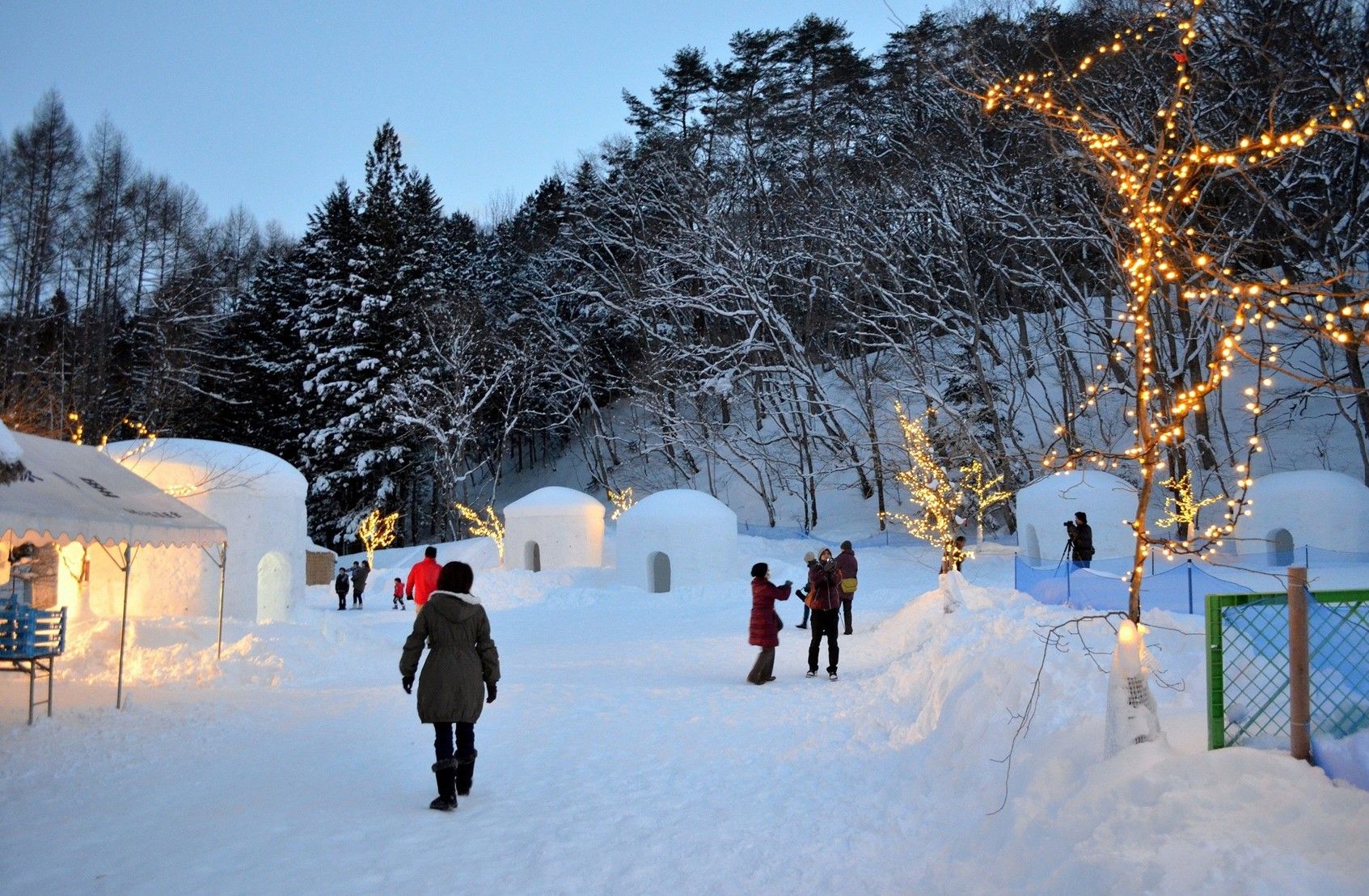 Similarly to Nakao’s Kamakura festival, the entire area around Yunishikawa Onsen comes alive for an elongated period of time, complete with huts, big and small. Naturally, frozen domes large enough for adults abound, but perhaps even more impressive is the Riverside Mini Kamakura Venue, where 700 miniature igloos built by the locals are lit and illuminate the riverside hills. It’s said that twilight is the best time to view this mesmerizing spectacle.
Elsewhere, there is a decorated shopping street, preserved thatched houses and a snow park for the kids (and onsen for adults). In the midst of a secluded snowy hot spring town and surrounded by traditional—and natural—attractions, you may just feel yourself slip back in time.
Address: 1042 Yunishikawa, Nikko-city, Tochigi Prefecture
Dates: January 31 – to March 2
General admission and the Riverside Kamakuri are free, other attractions’ fees will vary
Yokote, Akita
Last but most certainly not least, we head to Yokote, Akita, a city situated at the top of Japan’s biggest island of Honshu and a spot quite literally synonymous with kamakura. Indeed, the snow huts featured at the Yokote Snow Festival are of special historic and even international significance.
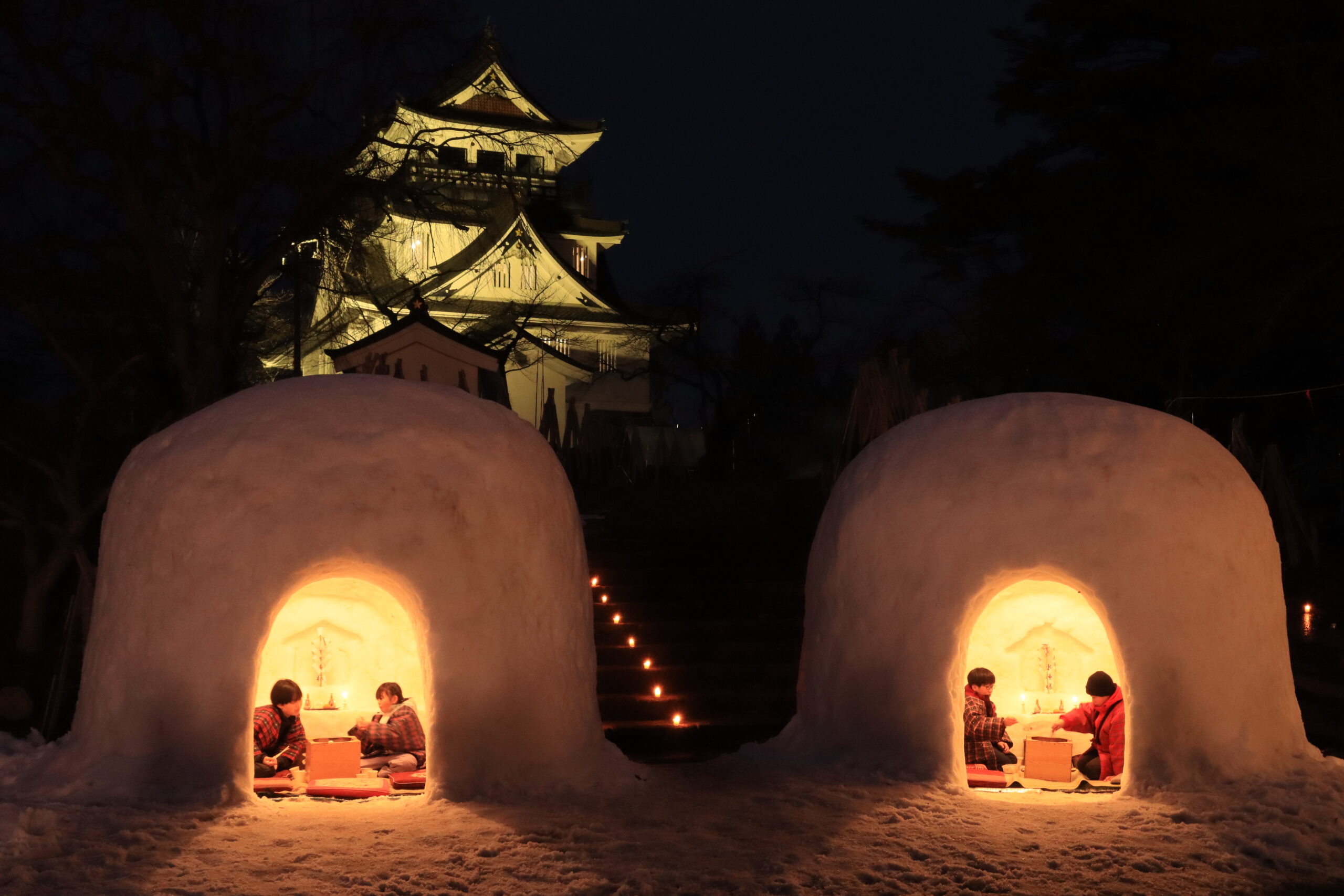 The story goes that during Japan’s Edo period (1600 – 1868), enormous square walls of snow were erected every January by samurai families in the area, and sacred objects like sake, rice cakes and shimenawa ropes were placed inside, until finally the entire block was lit ablaze to keep away evil spirits. Meanwhile, on the outskirts of town, merchants built their own snow caves honoring the water god Oshizu no Kami-san. Naturally, the local children joined in the fun and built huts designed more for fun.
Fast-forward to 1936, German architect Bruno Taut arrived in Japan after fleeing Nazi aggression back home and stumbled upon Yokote and the city’s magnificent snow structures. Upon witnessing the kamakura, he proclaimed “What wonderful beauty! I have never seen anything so beautiful, nor did I expect it to be.” They left such an indelible impression that he even mentioned them in his book Rediscovering Japanese Beauty.
The Snow Festival itself is a two-day affair packed with a plethora of events and sights like a portable shrine competition, mini kamakura along the Yokote River, mochi pounding, sledding, snow art and, of course, access to the sixty ubiquitous ice domes found around town. Inside, unwind and enjoy an assortment of sweet, rice cakes and amaeko (sweet sake), complete with cozy straw mats for flooring and roofing.
If you find your hands and feet almost frozen, thaw out at the sightseeing facility of Kamakurakan Hall, where the city’s relationship with kamakura is on display with actual snow huts preserved all year round.
Address: Yokote City Hall, Yokote Park, Futabacho, and other areas in Yokote, Akita Prefecture
Dates: February 15th and 16th
General admission is free, but limited numbers are available for refreshments
Instead of staying holed up in your apartment this season, get outside and experience what even architects call the “wonderful beauty” and traditional winter charm of Japan’s kamakura. Just remember to pack your boots and gloves!

Josh Furr
Joshua first came to Japan with his family over 10 years ago and it completely ruined his life (in the best of ways). When he’s not trying to pass the JLPT, he’s researching Japanese history, enjoying 80s J-Pop and dreaming of 牛丼. He’s currently writing, writing, writing…mostly about Japan and video games.